
We think from our customers' perspective
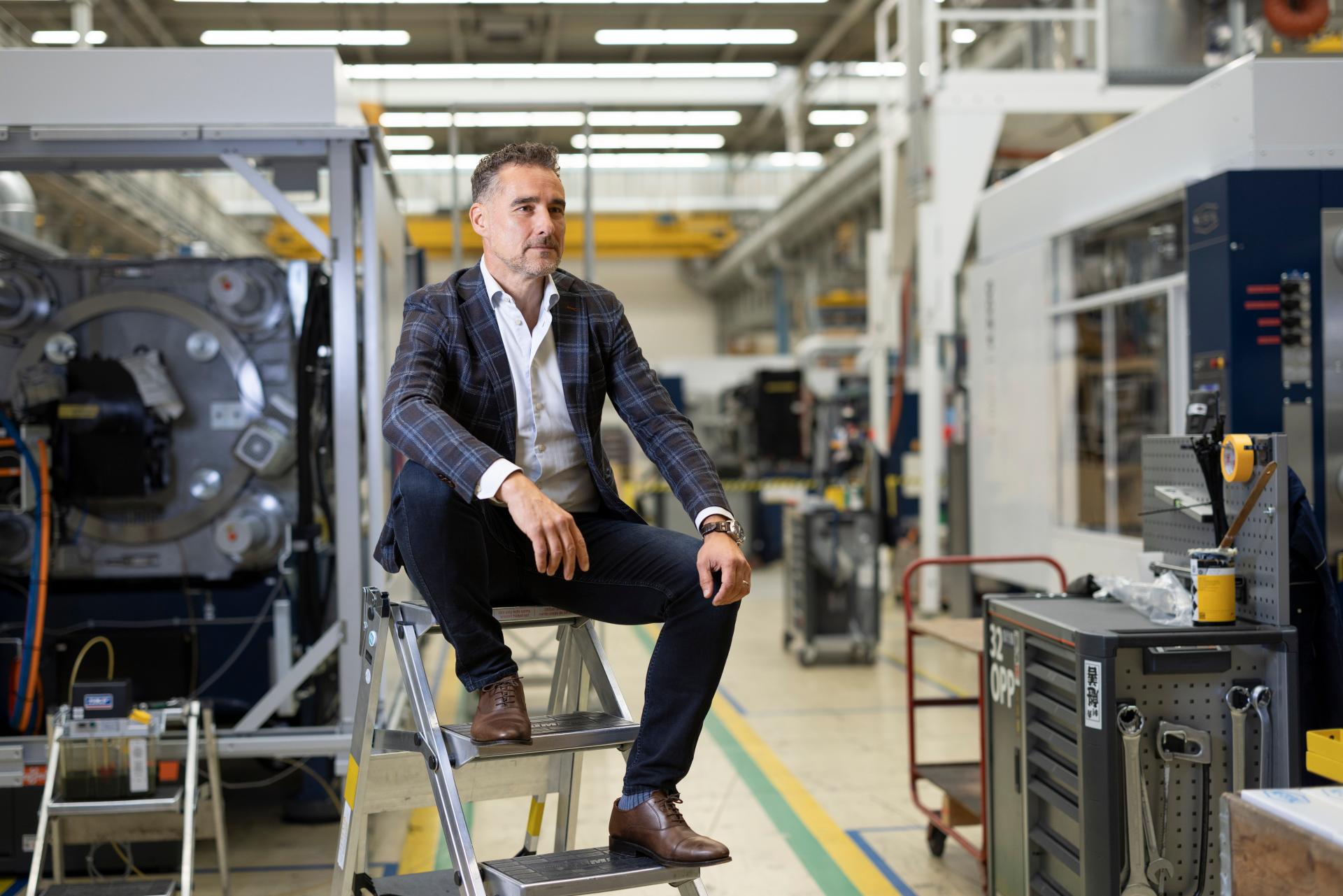
As the world's leading Swiss manufacturer of injection molding machines and system solutions for plastics processing, Netstal Maschinen AG is also intensively engaged with digitalization and sustainability. In this interview, Renzo Davatz explains what this means for the further development of technology and what role leadership plays in volatile times for the future of the company and Switzerland as a manufacturing location.
Mr. Davatz, how has your core business, the manufacture of injection molding machines for plastics, changed in recent years?
The most significant change is probably the pressure from Chinese manufacturers, who have caught up technologically and are pushing into Western markets with highly aggressive pricing. This combination of increasing technical competitiveness and enormous price aggressiveness is also changing the business for Western injection molding machine manufacturers.
Which target markets are particularly important to you?
Europe has historically been an important market for us. We are now well established there. We expect the greatest growth to come from the US, which is a very exciting market. At the same time, we are also active in Asia. For the past two to three years, we have also been very successful in India, which is also developing into an exciting market for us.
The packaging of food and the manufacture of medical consumables are fundamental aspects of our everyday lives. Does that mean we have a special responsibility?
The greatest responsibility that I, or we, feel is to live up to the Netstal brand promise. Netstal is known for maximum performance and optimum production efficiency. We want to live up to this promise not only with performance and quality at delivery or in the first year of operation, but throughout the entire life cycle of a machine. With comprehensive service for spare parts, retrofits, and optimizations, we want to maintain high production efficiency and availability of the systems throughout their entire service life. Of course, there are specific requirements in the food and medical sectors regarding cleanliness, traceability, and documentation, to which we have always been committed.
Are there any new trends in plastics processing that will shape the coming years?
In the areas of application in which we operate, there are not as many new plastic materials as there are in the automotive industry, for example. However, there is a trend towards using PET, the material used to make PET bottles, for other applications as well. For example, caps, which have traditionally been made from HDPE, are now also to be made from PET, even though this poses a major technical challenge. This would further facilitate the recycling of PET bottles, for which a closed loop has already been established in Switzerland and Germany. There are also attempts to produce thin-walled and food packaging from PET. In addition, there are bio-based plastics, which have not yet become widely accepted because they are too expensive in large quantities. Technically, this already works, but it does not yet make economic sense.
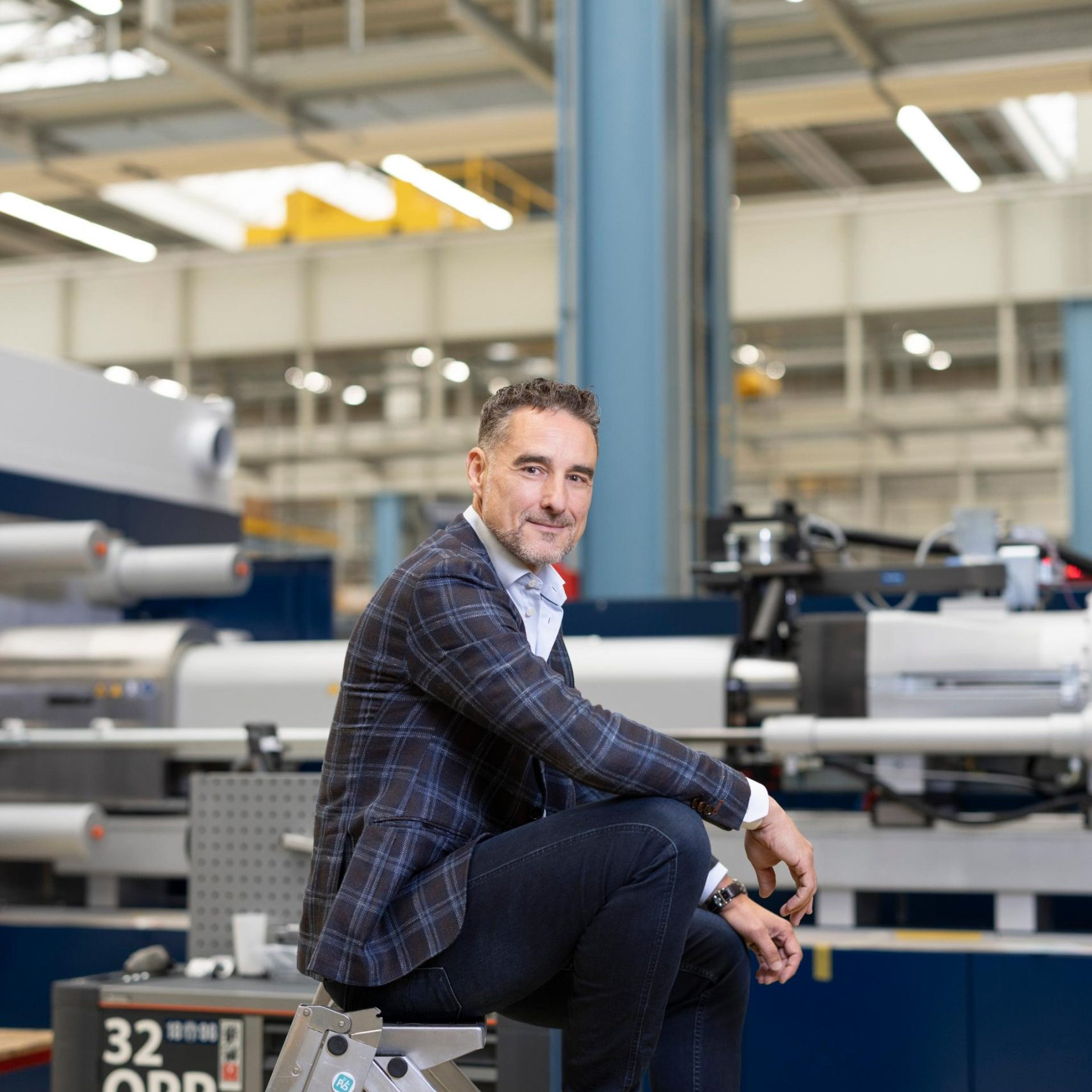
"There are product managers, salespeople, and application engineers for each area. And they think strictly within their field of application and work on optimizations for these applications."
To what extent are new developments determined by digitalization and sustainability?
Whereas in the past it was all about the physical product, namely the machine, today it is increasingly about being able to offer customers an integrated, networked, and therefore autonomous production cell. This should be as easy to operate as possible, deliver high output, and offer correspondingly large process windows. When it comes to sustainability, two aspects are now crucial. The machine itself should consume less and less energy. This means that hydraulic axes are increasingly being replaced by electric axes. Secondly, it is important that the machines can process materials such as rPET, which means recycled PET, without any problems.
So you always have to think from the perspective of customers who want to manufacture or package their products even better or more efficiently?
This customer-oriented approach is very important to us. We have four application units: PET preforms, which are preforms for subsequent PET bottles, closures, medical technology applications, and thin-walled packaging, for example, for ice cream, butter, or margarine. There are product managers, sales representatives, and application engineers for each area. They think strictly within their field of application and work on optimizations for these applications.
What sets Netstal apart from its international competitors?
We are very focused on our four areas of application and do nothing else. If you ask me about our USP, I would say that Netstal stands for exceptional production efficiency. Our machines may not be the cheapest to purchase, but they enable you to manufacture your product at the lowest possible cost.
What does leadership mean in the face of global crises, regional sanctions, or regulations?
In my opinion, all the volatility and uncertainty make the job more exciting than ever. I believe the challenge is that a good leader must be able to set a direction even when not all the answers are available. It is important to communicate honestly about what is known and what is not. And to set clear priorities that help the team remain capable of acting despite uncertainties. Good leadership in volatile times means having inner stability while everything around you is in flux.
What makes Netstal stand out as an employer?
I would highlight two points. First, despite, or perhaps even because of, a very challenging environment in the industry, we have a team that has developed a special corporate culture and is enthusiastic about our customers and their products. A genuine Netstal spirit, if I may say so. The second point is our international environment. With a technologically sophisticated product and an export quota of 95 percent, the company can naturally offer exciting and very diverse careers as well as opportunities for further development. It has been exciting from the very beginning. I was able to experience this myself, as I started as an apprentice in this company.
The interview was conducted for the new issue of “20 CEOs. 20 OPINIONS” in Handelszeitung, published on December 24, 2025. We translated it to make it available for our international followers. Click on the following link to view the entire issue (German).